Dr. Appliance
Bringing You Top Quality
Furnace Installation,
Maintenance
& Repair
Get Started
Fill out the form below and our team
will get in touch with you!
Dr. Appliance
Bringing You Top Quality
Furnace Installation,
Maintenance
& Repair
GET STARTED
Fill out the form below and our team
will get in touch with you!
About us
Focus on getting our jobs done
Every member of the Doctor Appliance team is a licensed professional who is dedicated to giving you the best service possible. It’s our way of going above and beyond. You can be confident that when you open your door to one of our technicians, you are getting a licensed professional.
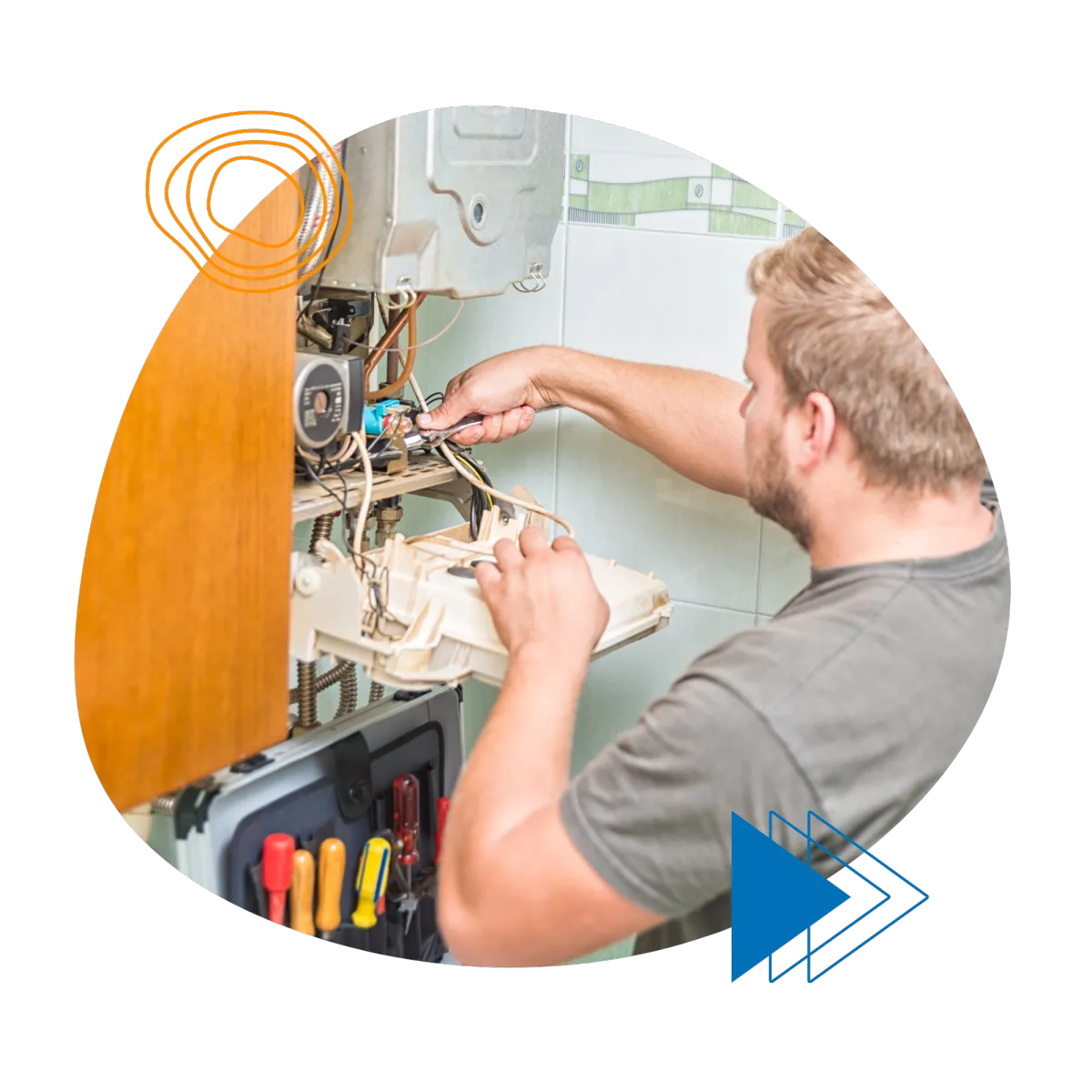
Furnace repair & installation service
The comfort of your home during the colder months of the year is dependent on the proper operation of your heating system. When your furnace breaks down or stops working properly, contact furnace repair service professionals like us!
Using cutting-edge techniques and tools, our licensed technicians can repair almost any type of home furnace. W e can quickly identify the source of the problem and get to work on making the necessary repairs!
Experts are here to help you!
When to contact us
Many homeowners don't give their furnace much thought until the first cold day of the year arrives and the furnace won't turn on or only blows cold air. Keep an eye out for common signs of trouble to avoid a total furnace failure.
Trying to address any problems early to help you avoid the most extensive (and thus more expensive) furnace repairs later on.
The following are indications that your furnace may require repairs:
Thumps, bangs, and scrapes are examples of loud, unusual noises.
Water accumulating near or or below the furnace
Inadequate or non-existent airflow
The odor of leaking gas from the furnace
Unknown increases in your utility bills
The furnace is blowing cold air.
The thermostat is no longer functional.
Cycling that is constant or frequent
Your furnace is over 12 years old.
Your furnace hasn't been serviced in over a year.
If you are experiencing these issues, experts at Doctor Appliance are ready to help and
get your furnace fixed in no time. Email us at doctor.appliance@hotmail.com or
click the "request a free quote" button to fill out the form and we will get in touch with you!
We provide 24-hour services, so you won't have to wait until
convenient business hours to have your garage heater fixed if it
breaks down in the middle of the night!
Why choose us
When you engage Doctor Appliance to service your HVAC and household appliances,
you can be confident that your equipment is in good hands because:

We provide high-quality installation, maintenance, and repairs.

Our technicians are licensed and experts at performing all types of repairs.

Our technicians have extensive experience repairing appliances of various brands.

We have the necessary tools and replacement parts to repair your appliance.
Contact us for fast, reliable repair service!
What our clients are saying

Avery was amazing, the service was fast and efficient. Plus he was friendly and polite. I will definitely call the Appliance Doctor anytime I have a problem with any of my appliances their service was great. Thanks again Avery.
Service: Heating System Repair
Dave “Hustle” B.
We created a new laundry area and upgraded to larger units. Every trades person that came was licensed and the overall job was amazing. They did it all in the new location HVAC, Electrical, Plumbing and installation. Our new washer/dryer looks fantastic and everything works perfectly.
Service: HVAC duct & vent installation, Household appliance installation
Tom T.
Today I had a central air system installed in what I thought to be a very difficult location. Matt from Dr. Appliance installed it like it was no big deal. He did a great job, tested his work fully, and left my place clean like he was never there! I'm very happy now that I no longer need to install window units all over the house! Thanks guys(yes you too Avery)
Service: Ductless heating & A/C services
Kirby S.
I had a great service provided by doctor appliance. They provided a great service for a price to match; clean, efficient, and a professional job. Best furnace investment I could’ve ever made.
Service: Heating system installation
Adam O.
Avery and his technicians are professional and very respectful when working in your household he does the job with precision and makes sure everything is up to par he even had a coffee with me after he was done installing my dishwasher and water line for my fridge! I definitely recommend Doctor appliance
Service: Dishwasher repair, Refrigerator/freezer repair, Refrigerator repair
Wayne C.
Avery came when he said made a small adjustment to the dishwasher. It's quiet now. Better than before.
Service: Dishwasher repair
Jordan A.
Frequently Asked Questions
What furnace means?
An enclosed structure that generates heat (for heating a house or for reducing ore)
What does a furnace do?
Furnaces heat the air and use ducts to distribute the heated air throughout the house. Boilers heat water and supply hot water or steam for heating. Steam is delivered to steam radiators via pipes, and hot water can be delivered via baseboard radiators or radiant floor systems, or it can heat air via a coil.
Is the furnace part of the AC?
Your furnace and air conditioner operate independently of the rest of your HVAC system. Ducts and vents are used by both your furnace and your air conditioner to circulate air throughout your home. These systems are linked because they share the same infrastructure. They do, however, continue to operate independently of one another.
How long does a furnace last in a house?
A well-maintained furnace can last at least 15 to 20 years, but performing annual maintenance and being diligent with repairs can help it last even longer.
Does the furnace need water to run?
Furnaces are also used to heat your home but do not use any water. Instead, furnaces heat the air and then distribute it throughout your home via a network of ducts.
What are the four main types of furnaces?
There are four main types of furnaces: natural gas, oil, electric, and propane. Electric furnaces can heat the air by exposing heated elements, while other types of furnaces typically require a heat exchanger or chamber that warms the surrounding air.
What are the most common problems with furnaces?
Dirty ductwork
Old filters
Faulty starting mechanism
Broken blower components.
Malfunctioning heat exchanger
Bad Limit Switch
The thermostat is in need of repair
Tripped circuit breaker
What is the safest type of furnace?
Electric furnaces are highly customizable, and new technology such as smart thermostats can be easily integrated. These furnace systems also do not emit harmful or hazardous byproducts, making them one of the safest furnace types. They are also extremely energy efficient, wasting very little energy in your home or building.
What are the advantages of furnaces?
Furnaces are affordable and safe
Furnaces Improve Indoor Air Quality
Furnaces are a highly efficient home heating system
How do you know if your furnace is dying?
Loud Operation (Noises can include rattling, clicking, booming, and grinding. If it sounds off, have it looked into.)
Uneven Heating
Short-Cycling
High Heating Bills
You never seem to be warm enough
Get a quote today
To request a call, please fill out the form below

Other services we offer
Furnace
Stove/Cooktop
Oven
Refrigerator/Freezer
Dryer
Dishwasher
Washing Machine
HVAC Duct & Vent
A/C System
Heating System
HVAC System
Thermostat
Ductless Heating & A/C Services